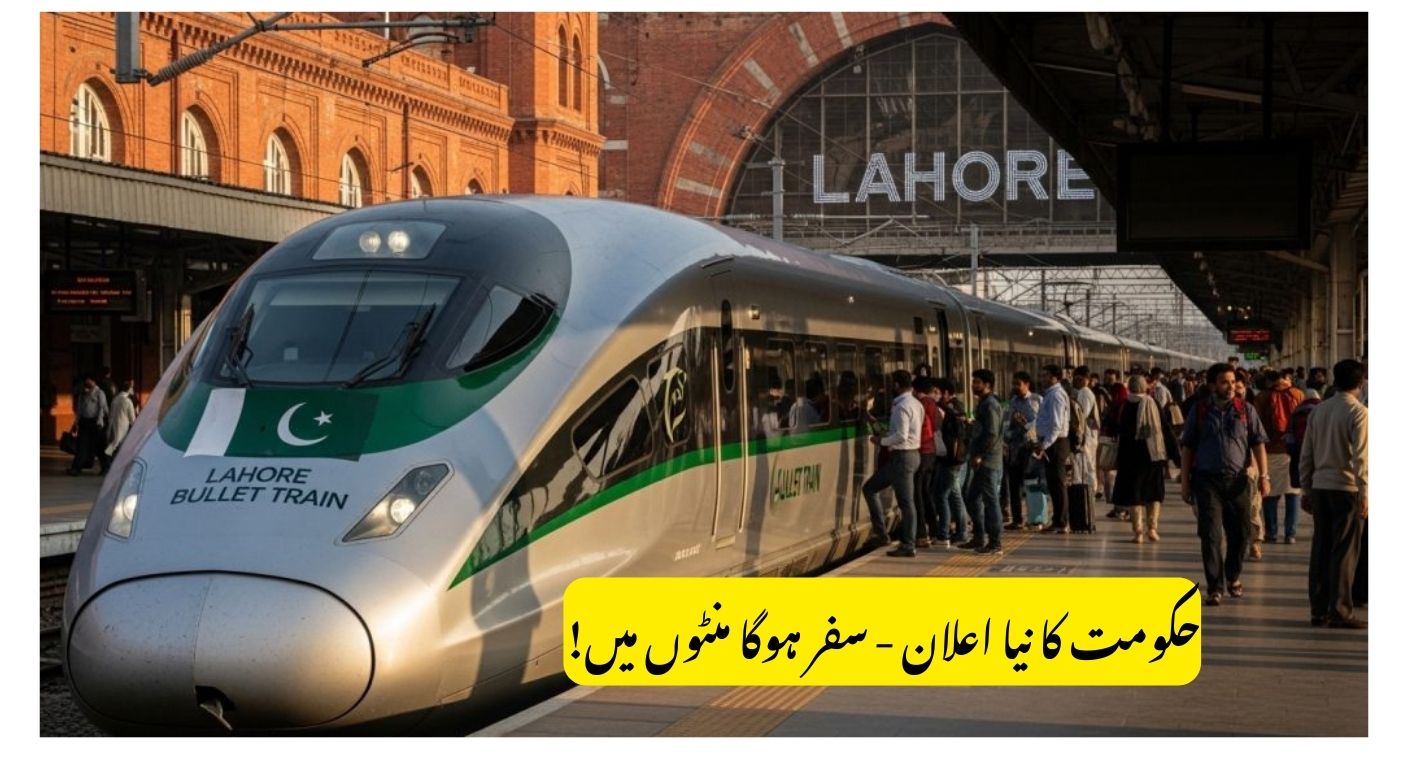
Pakistan is planning one of the most ambitious transportation projects in its history: a high‑speed bullet train network that would radically transform intercity travel. While the country’s existing railway system has struggled with outdated infrastructure and slow speeds, the proposed bullet train aims to bring modern high‑speed rail technology to Pakistan — cutting long journeys down to just a few hours.

These plans reflect a broader effort to modernize the nation’s railways and improve economic connectivity among major cities.
What Is a Bullet Train?
A bullet train refers to a high‑speed rail system that travels much faster than conventional trains — typically between 200 km/h and 300 km/h or more. Such trains use advanced tracks, electrification, and signaling systems, providing rapid, smooth, and safe transport between major urban centers.

Countries like Japan, China, and France are known for their successful high‑speed rail networks, and Pakistan’s proposed bullet train would be the first of its kind in South Asia if implemented.
The Big Plan: Lahore to Karachi Bullet Train
The most high‑profile part of Pakistan’s bullet train proposal is a 1,215‑kilometer high‑speed rail line between Karachi and Lahore — two of the country’s largest and most economically significant cities.
Key Features of the Project
| Feature | Details |
|---|---|
| Route | Karachi → Hyderabad → Multan → Sahiwal → Lahore |
| Distance | ~1,215 km |
| Top Speed | ~250 km/h |
| Estimated Travel Time | ~5 hours (vs 18–22 hours now) |
| Railway Upgrades | Double tracks, new bridges, advanced signaling |
| Part of | Main Line‑1 (ML‑1) project under CPEC |
| Target Completion | ~2030 |
| Estimated Cost | ~$6.8 billion |
This high‑speed line would cut travel time between Karachi and Lahore to approximately five hours — compared with almost a full day on conventional trains — making it a competitive alternative to air travel.
Where It Fits: The ML‑1 Upgrade
The bullet train plan is tied to the larger Main Line‑1 (ML‑1) project under the China‑Pakistan Economic Corridor (CPEC). ML‑1 is a massive upgrade of the existing Karachi‑Peshawar rail line spanning most of the country.

ML‑1 Includes:
- Laying double tracks along key stretches
- Rebuilding old bridges
- Installing modern signaling and communication systems
- Introducing advanced safety and automation
- Improving freight and passenger capacity
These upgrades are essential to support safe high‑speed rail travel, though significant additional work and investment will be needed to fully realize bullet train operations.
Estimated Benefits
If completed as planned, the bullet train project could have major impacts:
1. Reduced Travel Time
The shift from 18–22 hours to roughly five hours could revolutionize travel between southern and northern Pakistan.
2. More Affordable Travel
Officials estimate ticket prices might be PKR 5,000 to 10,000 for economy and business class, significantly cheaper than typical domestic airfares.

3. Job Creation
Construction and operation of this high‑speed line could create thousands of employment opportunities across engineering, construction, rail operations, and logistics.
4. Boost to Rail Freight
The project aims to increase railway freight’s share from a modest 4% to 20% by 2030, reducing dependency on expensive road transport and saving fuel costs.
5. Economic Connectivity
Faster connections between major cities can stimulate business, trade, and tourism, making the economy more dynamic and efficient.
Additional Bullet Train Plans
Separately, the Punjab provincial government has announced a local high‑speed rail plan between Lahore and Rawalpindi — with projected travel time cut to around 2.5 hours. This would be Pakistan’s first provincial bullet train initiative.

Working groups have also been formed to produce feasibility studies and timelines for this project, though it remains in early planning stages.
Challenges Ahead
Despite the excitement around bullet trains, experts and officials have pointed out significant practical hurdles:
1. Outdated Infrastructure
Pakistan’s existing rail network is largely old and not currently capable of supporting true high‑speed operations — meaning massive upgrades are essential before bullet trains can run safely.

2. High Cost
High‑speed rail is expensive — experts estimate hundreds of billions of rupees may be required for true bullet train infrastructure. Even feasibility, tracks, and signaling upgrades cost billions.
3. Funding and Technical Support
Securing international funding, technical partners, and long‑term economic planning is essential. Some projects linked to CPEC have faced funding delays, though institutions like the Asian Development Bank are reportedly considering support for vital ML‑1 sections.
Public and Expert Opinions
While many politicians praise the vision of Pakistan’s first bullet train as a symbol of progress, some critics argue it could be ambitious given current economic realities and that focused improvements to existing networks might be more practical in the short term.

Current Status and Timeline
According to media reports and planning documents:
- Feasibility studies completed: mid‑2025
- Construction start: estimated 2026
- Testing phase: around 2029
- Operational launch: expected by 2030
These timelines are contingent on funding, political support, and successful completion of associated rail infrastructure upgrades.
Conclusion
Pakistan’s first bullet train project — particularly the Karachi to Lahore high‑speed link — represents an ambitious effort to modernize the nation’s transport infrastructure. If completed, it could cut travel times dramatically, improve affordability, and expand economic opportunity across regions.
While significant challenges remain, including funding and technical requirements, the plan signals a long‑term vision for Pakistan’s rail sector and future connectivity.